OT: Minnesota Fun and/or Interesting Tidbits

Just for the fun of it ~
Do any of you know any fun or interesting facts, stories, or tidbits about Minnesota? A town, an establishment of some kind, tourist attraction, even something that's totally nonsense, etc.? If so, please share.
Here's one about the World's Largest Boot.
The World's Largest Boot sits in downtown Red Wing, Minnesota, inside the flagship Red Wing Shoe Store, and it exists purely as a birthday present a company built for itself. Charles H. Beckman founded Red Wing Shoe Company in 1905, believing that good boots weren't enough on their own, they had to be built the right way, using quality leather and genuine craftsmanship rather than shortcuts. That philosophy carried the company through a full century in business, and when Red Wing hit its 100th anniversary in 2005, it marked the occasion in the most literal way imaginable: by building an actual boot big enough to make the news.
The boot itself is a scaled-up replica of Red Wing's most iconic model, the classic style #877, built using the exact same materials and design as the real thing, just massively oversized. It stands roughly 16 to 20 feet tall depending on the measurement, stretches 20 feet long, and was constructed from the hides of around 80 cows, with more than 80 pounds of brass used just for the eyelets. The finished size comes out to a genuinely absurd 638½ D, a number that immediately earned it a Guinness World Record as the World's Largest Boot, and it's officially been billed as too big even for the Statue of Liberty to wear.
The boot lives inside the Red Wing Shoe Museum, a free exhibit built right into the company's flagship retail store, where visitors can also walk through more than a century of company history, including WWII-era Skytrooper boots, a virtual tour of the manufacturing process, and original advertising illustrations created for the brand by Norman Rockwell. The boot occasionally makes outdoor appearances for parades and local events, but mostly stays put indoors, giving visitors an easy photo op alongside a piece of footwear built at a scale nobody could actually wear.
More than two decades after its debut, and 120 years after Beckman first opened his doors in the same small Minnesota town, Red Wing Shoe Company remains family owned and still headquartered exactly where it started. The giant boot has become something closer to a permanent local landmark than a passing centennial gimmick, a genuinely oversized monument to a company that's built its entire reputation on taking boots seriously, even when it decided to build one nobody could ever put on.

LIVE WELL ~ LOVE MUCH ~ LAUGH OFTEN

Wonder if Mr. Bunyan lost a boot
https://en.wikipedia.org/wiki/Paul_Bunyan_and_Babe_the_Blue_Ox
greediron wrote:
Wonder if Mr. Bunyan lost a boot
https://en.wikipedia.org/wiki/Paul_Bunyan_and_Babe_the_Blue_Ox
Nope, he's wearing both of them. 😎
 Paul Bunyan and Babe the Blue Ox are the names of a pair of large statues of the American folk hero Paul Bunyan and his ox, located in Bemidji, Minnesota. This roadside attraction has been listed on the National Register of Historic Places since 1988.
Built in 1937 to attract attention of passing motorists, these are similar to such structures as the Benewah Milk Bottle, the Teapot Dome Service Station, or the comparably colossal Dinosaur Park sculptures in South Dakota. These were all built in a period of time when automobile travel became increasingly affordable and common.
This pair of statues are said by the Kodak Company to be the "second most photographed statues in the United States", behind Mount Rushmore in South Dakota.
LIVE WELL ~ LOVE MUCH ~ LAUGH OFTEN
U.S. BANK STADIUM ~ Some General Info & Accomplishments
"U.S. Bank Stadium has been an incredible home for the Minnesota Vikings over the last decade and has helped create what we believe to be the best game-day environment in the NFL," said Vikings Owner/President Mark Wilf. "From memorable moments on the field to hosting some of the world's biggest sporting and entertainment events, the stadium has showcased Minnesota on a global stage while providing fans and guests with an exceptional experience each time they walk through the doors. We are proud to celebrate this milestone alongside the MSFA, Legends Global, U.S. Bank and other team partners, and we look forward to building on our success in the future."
The MSFA released a third-party comprehensive economic impact study in March 2026, publishing findings that U.S. Bank Stadium has already generated $2.34 billion in total economic benefits from its construction, followed by $2.77 billion in statewide economic activity from operations through FY 2025.
On average, the stadium hosts approximately 1.14 million guests each year, spanning professional football, international touring concerts, championship sporting events, community programming, and private events.
U.S. Bank Stadium averages 71 days per year of community programming, including the Minnesota State High School League football and soccer championships, youth football, amateur baseball and softball games, graduations, proms, and indoor skating and running in the winter months.
U.S. Bank Stadium has accomplished many first records for operations in the venue's 10-year history. On Feb. 4, 2018, U.S. Bank Stadium hosted Super Bowl LII, which became the first zero-waste Super Bowl to achieve more than a 90% waste-diversion rate. In August 2019, U.S. Bank Stadium became the first professional sports stadium in the world to earn LEED Platinum Certification for Operations and Maintenance using the Arc Performance Platform.
For the 2024 NFL season, U.S. Bank Stadium and the Minnesota Vikings achieved the highest score ever recorded in the NFL's Voice of the Fan survey for Overall Game-Day Satisfaction. In 2025, U.S. Bank Stadium was the first NFL stadium to receive the Paralyzed Veterans of America Barrier-Free America Award recognizing the venue's mobility services and commitment to ensuring all guests feel valued and fully accommodated.
"U.S. Bank Stadium has cemented its place as one of North America's premier venues over the last 10 years with a strong history of operational excellence," said Shannon Kelly, General Manager for U.S. Bank Stadium's operator, Legends Global. "The venue's proven ability to host every scale of event consistently at the highest standard is a testament to the MSFA and Legends Global's management team for keeping the stadium in top condition and to our team members responsible for making each event possible."
LIVE WELL ~ LOVE MUCH ~ LAUGH OFTEN

The mighty Mississippi..as seen from it's headwaters at Itasca State Park
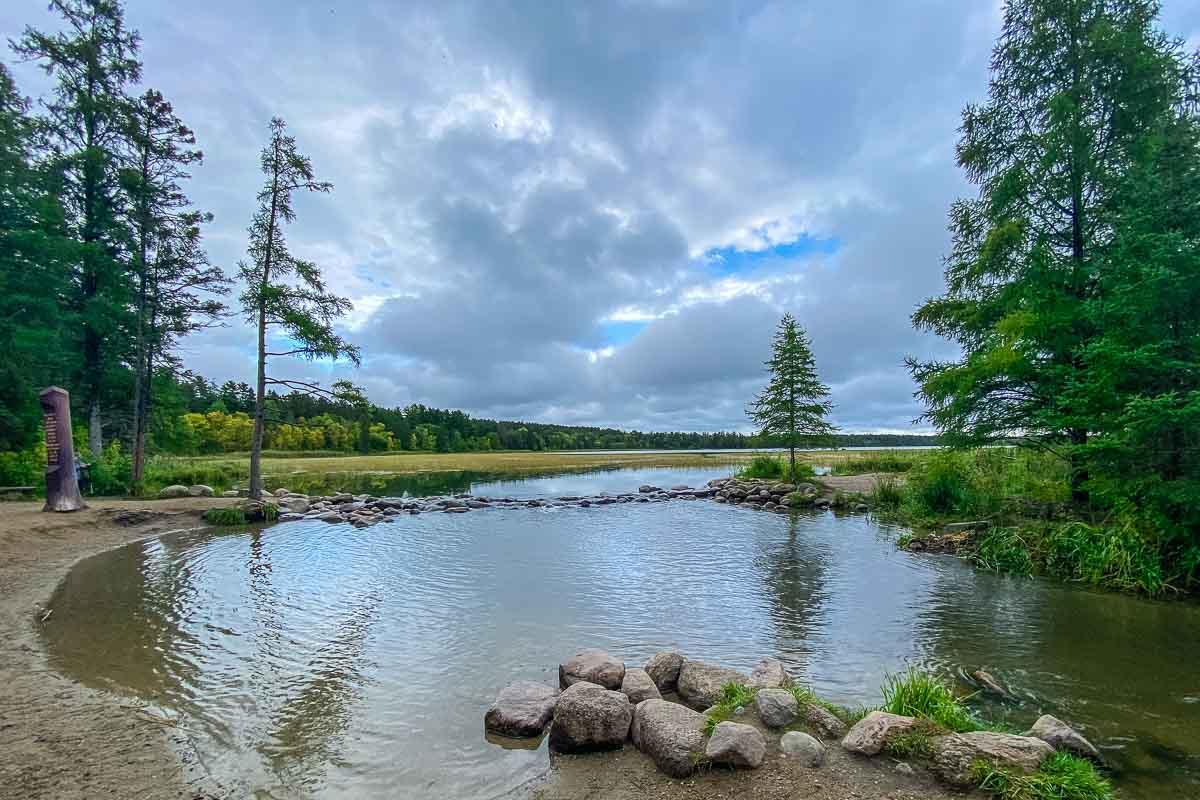 https://mntrips.com/itasca-state-park-headwaters-mississippi-river/
badgervike wrote:
The mighty Mississippi..as seen from it's headwaters at Itasca State Park
https://mntrips.com/itasca-state-park-headwaters-mississippi-river/
Beautiful! 🥰
LIVE WELL ~ LOVE MUCH ~ LAUGH OFTEN
EXCELSIOR AMUSEMENT PARK
Excelsior Amusement Park opened on Lake Minnetonka's Excelsior Bay in 1925, built by Detroit amusement park operator Fred W. Pearce, who chose the spot specifically because it sat at the end of the Minneapolis streetcar line, a genuine trolley park design meant to pull crowds straight out from the Twin Cities for a summer afternoon. The site itself wasn't easy ground to build on either, ten acres of swamp that forced Pearce to construct several rides on pilings above the wet land, and when the park's signature wooden roller coaster went up, teams of horses hauled the frame into place using pulleys, well before any of the heavy machinery that would've made the job simpler.
That coaster, known as the Cyclone, became the park's defining attraction from opening day straight through to closing day nearly fifty years later, described by amusement park historian Greg Van Gompel as the ride's most popular draw for its entire run. Alongside it sat a Ferris wheel, bumper cars, a fun house, boat rides on Lake Minnetonka, and a carousel that's technically the only ride from the original park still operating anywhere today.
The park's ballroom, Danceland, turned out to be just as much of a draw as the rides. Its stage hosted Tommy Dorsey and Lawrence Welk in its earlier decades, then pivoted with the times, bringing in the Beach Boys in 1963 and, strangely, the Rolling Stones the following year, though only 283 people actually showed up for that particular show. The park's publicity department worked overtime too, running beauty pageants, company picnics, and a "Free Tickets for Good Marks" program that generations of Twin Cities kids still remember fondly, an amusement park literally rewarding good report cards.
Attendance dwindled through the late 1960s and into the 70s, and Excelsior Amusement Park closed for good on Labor Day, 1973, after 49 seasons. Fred Pearce and his investment partners didn't walk away from the business entirely though. Three years later, in 1976, they opened Valleyfair in Shakopee as its spiritual successor. A persistent local myth claims the old wooden Cyclone got moved there too, but it didn't. The coaster was torn down and destroyed, though a surviving car from it now sits on permanent display at the Excelsior-Lake Minnetonka Historical Society museum, alongside a funhouse mirror still distorting kids' reflections decades after the rest of the park disappeared under condominiums and a restaurant now standing on the original site.

LIVE WELL ~ LOVE MUCH ~ LAUGH OFTEN
Speaking of Mr. Bunyan....
PAUL BUNYAN'S AXE
Paul Bunyan's Axe traces back to Minnesota's very first meeting with Wisconsin on November 15, 1890, a game the Gophers won 63-0, kicking off what's now the longest continuously played rivalry in NCAA Division I football history. That rivalry ran without a physical trophy for its first four decades, and it took until 1930 for one to actually show up. Minneapolis man R.B. Fouch carved a black walnut trophy known as the Slab of Bacon, football-shaped, with a carved letter that read as either "M" or "W" depending on which way you flipped it, "BACON" etched into both ends as a nod to the winner "bringing home the bacon."
The bacon didn't survive one particularly chaotic afternoon. After Minnesota's win in 1943, jubilant fans stormed the field, and Wisconsin student Peg Watrous, tasked with formally handing the trophy over to a Minnesota representative, lost track of it entirely in the commotion. Some accounts say it reached Minnesota's locker room before coach George Hauser declined it, suggesting trophy traditions get shelved until after the war. Either way, the Slab of Bacon simply vanished, and for the rest of the 1940s neither school had any physical prize left to fight over.
Wisconsin's National W Club stepped in to fix that in 1948, commissioning the six-foot-handled axe that's defined the rivalry ever since, engraved continuously with every game's score and topped by a bronze Paul Bunyan figure, the mythical lumberjack representing the logging heritage both states share. That handle length wasn't accidental either, long enough that the winning team could use it to chop down a goalpost after a win, a tradition that's stuck around at Minnesota home games specifically.
The missing Slab of Bacon resurfaced completely by accident in 1994, when a University of Wisconsin athletics intern named Will Roleson spotted an unfamiliar leather briefcase sitting in a Camp Randall storage room. Inside sat the long-lost trophy, still carrying game scores etched as recently as 1970, nearly fifty years after it had supposedly disappeared for good. It's on display in the Badgers' football offices today, a strange bookend to a story that had already moved on without it.
From a Minnesota perspective, the numbers tell a real story of shifting momentum. The Gophers led the all-time series for decades, at one stretch by as many as 20 games, but Wisconsin ripped off 14 consecutive wins between 2004 and 2017, flipping the overall trophy series in the Badgers' favor. Minnesota finally snapped that streak in 2018, and the two programs have kept trading wins since, most recently a 17-7 Minnesota victory in November 2025. When the Big Ten dissolved its divisional structure in the 2023 realignment, the conference specifically protected this matchup, guaranteeing Minnesota and Wisconsin will keep meeting every single year, axe on the line, exactly as they have since 1890.

LIVE WELL ~ LOVE MUCH ~ LAUGH OFTEN

MN State Fair
The "Great Minnesota Get-Together"—is the largest state fair in the United States by average daily attendance. Held in Falcon Heights, MN, the 12-day event always runs through Labor Day. It routinely attracts nearly 2 million visitors and generates over $300 million in economic impact.
Founding & Location: The fair dates back to a territorial exposition in 1855, and the first official state fair was held in 1859. It found its permanent 322-acre home in 1885.
Historical Milestones: In 1901, Vice President Theodore Roosevelt delivered his famous "Speak Softly and Carry a Big Stick" speech at the Grandstand
Independence: The fair is a self-supporting quasi-state agency and has not received state tax funding since 1949.
The Food: It’s famous for food-on-a-stick, which was pioneered in 1947 with the introduction of the Pronto Pup. Sweet Martha's Cookie Jar can bake up to 3 million chocolate chip cookies daily.
Cultural Traditions: The fan-favorite Princess Kay of the Milky Way butter sculptures feature dairy princesses who are carved from 90-pound blocks of butter over the 12 days.

Hurry-up Vikings, we ain't getting any younger!
Cricket wrote:
EXCELSIOR AMUSEMENT PARK
Excelsior Amusement Park opened on Lake Minnetonka's Excelsior Bay in 1925, built by Detroit amusement park operator Fred W. Pearce, who chose the spot specifically because it sat at the end of the Minneapolis streetcar line, a genuine trolley park design meant to pull crowds straight out from the Twin Cities for a summer afternoon. The site itself wasn't easy ground to build on either, ten acres of swamp that forced Pearce to construct several rides on pilings above the wet land, and when the park's signature wooden roller coaster went up, teams of horses hauled the frame into place using pulleys, well before any of the heavy machinery that would've made the job simpler.
That coaster, known as the Cyclone, became the park's defining attraction from opening day straight through to closing day nearly fifty years later, described by amusement park historian Greg Van Gompel as the ride's most popular draw for its entire run. Alongside it sat a Ferris wheel, bumper cars, a fun house, boat rides on Lake Minnetonka, and a carousel that's technically the only ride from the original park still operating anywhere today.
The park's ballroom, Danceland, turned out to be just as much of a draw as the rides. Its stage hosted Tommy Dorsey and Lawrence Welk in its earlier decades, then pivoted with the times, bringing in the Beach Boys in 1963 and, strangely, the Rolling Stones the following year, though only 283 people actually showed up for that particular show. The park's publicity department worked overtime too, running beauty pageants, company picnics, and a "Free Tickets for Good Marks" program that generations of Twin Cities kids still remember fondly, an amusement park literally rewarding good report cards.
Attendance dwindled through the late 1960s and into the 70s, and Excelsior Amusement Park closed for good on Labor Day, 1973, after 49 seasons. Fred Pearce and his investment partners didn't walk away from the business entirely though. Three years later, in 1976, they opened Valleyfair in Shakopee as its spiritual successor. A persistent local myth claims the old wooden Cyclone got moved there too, but it didn't. The coaster was torn down and destroyed, though a surviving car from it now sits on permanent display at the Excelsior-Lake Minnetonka Historical Society museum, alongside a funhouse mirror still distorting kids' reflections decades after the rest of the park disappeared under condominiums and a restaurant now standing on the original site.
Great memories there. Thanks for posting Cricket. The Free Tickets for Good Marks program was always a great way to end the school year.
purplefaithful wrote:
MN State Fair
The "Great Minnesota Get-Together"—is the largest state fair in the United States by average daily attendance. Held in Falcon Heights, MN, the 12-day event always runs through Labor Day. It routinely attracts nearly 2 million visitors and generates over $300 million in economic impact.
Founding & Location: The fair dates back to a territorial exposition in 1855, and the first official state fair was held in 1859. It found its permanent 322-acre home in 1885.
Historical Milestones: In 1901, Vice President Theodore Roosevelt delivered his famous "Speak Softly and Carry a Big Stick" speech at the Grandstand
Independence: The fair is a self-supporting quasi-state agency and has not received state tax funding since 1949.
The Food: It’s famous for food-on-a-stick, which was pioneered in 1947 with the introduction of the Pronto Pup. Sweet Martha's Cookie Jar can bake up to 3 million chocolate chip cookies daily.
Cultural Traditions: The fan-favorite Princess Kay of the Milky Way butter sculptures feature dairy princesses who are carved from 90-pound blocks of butter over the 12 days.
Geeze, does this bring back fond memories! (And a scary one) My dad (may he rest in peace) was handicapped & worked for Goodwill. He would take me to work with him on occasion, (which I always looked forward to & totally loved going), so I got to know several of the workers. There was a very sweet, kind lady by the name of Pat who absolutely adored me. When they were having a company outing at the fair, she wanted me to go with her. We had the best time. I did, however get the life scared out of me on the roller coaster due do the lock bar malfunctioned & I just knew I was going to fly out of that car, go flying in the air & land on someone on the ground! 😱 The operator asked me if I wanted to ride again for free, but....... NO THANKS!!!! 😂 I laugh about it now, but I was sure one scared little girl at the time.
LIVE WELL ~ LOVE MUCH ~ LAUGH OFTEN
Cricket wrote:
Geeze, does this bring back fond memories! (And a scary one) My dad (may he rest in peace) was handicapped & worked for Goodwill. He would take me to work with him on occasion, (which I always looked forward to & totally loved going), so I got to know several of the workers. There was a very sweet, kind lady by the name of Pat who absolutely adored me. When they were having a company outing at the fair, she wanted me to go with her. We had the best time. I did, however get the life scared out of me on the roller coaster due do the lock bar malfunctioned & I just knew I was going to fly out of that car, go flying in the air & land on someone on the ground! 😱 The operator asked me if I wanted to ride again for free, but....... NO THANKS!!!! 😂 I laugh about it now, but I was sure one scared little girl at the time.
That would be scary for an adult too...Cant do coasters anymore. Either too old or too smart.
Might be neither.
Hurry-up Vikings, we ain't getting any younger!
RED OWL
Red Owl started in Rochester, Minnesota in 1922, and it wasn't even a grocery chain at first. It grew out of a coal company, the St. Anthony and Dakota Elevator Co., with a slogan that had nothing to do with food at all: "Be wise, burn Red Owl coal." Groceries came later, and once they did, the name stuck around a lot longer than the coal business ever did.
By the 1950s and 60s, Red Owl had become the dominant grocery chain across the Twin Cities and beyond, eventually commanding 55 percent of Minnesota's entire grocery market, with 172 stores spread across ten states including Wisconsin, Iowa, the Dakotas, and Michigan. Headquartered in Hopkins and led for a stretch by Ford Bell, son of General Mills founder James Ford Bell, Red Owl wasn't just a place to shop. For a whole generation of Minnesota kids, it was where you got your comic books and a bottle of pop while your mom worked through the actual grocery list.
The chain started fading through the 1970s and 80s, sold off through a string of corporate owners, Gamble-Skogmo, then Wickes, before finally landing with Supervalu in 1988, and the Red Owl name mostly disappeared from Minnesota storefronts not long after.
What's stuck around is the nostalgia, and it hasn't faded the way the stores did. Former employees still gather every year for a reunion lunch at the Golden Valley American Legion, cashiers and truck drivers and warehouse workers swapping memories of a company one former executive called simply the most important people in Midwest grocery business during their run. Red Owl merchandise, neckties, spice tins, soda cans with that red owl logo, still sells briskly on eBay decades later. In the tiny town of Stewart, population barely 600, a group of former shoppers and local history buffs bought the old Red Owl building for $1,000 and have been slowly turning it into an actual museum, proof that a grocery store chain gone for over thirty years still means enough to people that they'll rebuild it, brick by brick, just to keep the memory somewhere real.

LIVE WELL ~ LOVE MUCH ~ LAUGH OFTEN
The Wells Fargo Center
The Wells Fargo Center in downtown Minneapolis stands on ground that had already burned once by the time construction started. The site originally held the Northwestern National Bank Building, destroyed in a devastating fire in 1982, one of the era's most dramatic Minneapolis disasters, with the damaged structure ultimately imploded two years later to clear the way for something entirely new.
Northwestern National Bank's parent company, renamed Norwest Corporation not long after, partnered with Houston developer Gerald Hines to rebuild on the site, hiring renowned architect César Pelli to design the replacement. Pelli's original vision called for a 45-story square-footprint tower ambitious enough to become the tallest building in Minneapolis outright, but when the available site got cut in half, the design had to change dramatically, resulting in the stepped, art deco silhouette that actually went up instead, completed in 1988 at 774 feet across 57 stories.
Pelli built the tower as a deliberate homage to classic American skyscraper design, drawing direct inspiration from 30 Rockefeller Plaza in New York and echoing local Art Deco landmarks like the Foshay Tower a few blocks away. Unlike most of its glass-clad downtown neighbors, including the nearby IDS Center, the building is wrapped almost entirely in stone, warm-toned Mankato limestone across most of the facade, white marble accents on the upper levels, and red Indian granite worked into the base, giving it a genuinely different texture than anything else on the Minneapolis skyline.
The interior carries real continuity with the building it replaced. Rather than discard everything lost in the 1982 fire, architects incorporated salvaged elements from the old Northwestern Bank Building directly into the new tower, chandeliers hung in the rotunda and elevator lobbies, cast iron rails on the second-floor balconies, sculpted bronze plaques and commemorative medallions preserved on the main floor. A five-story domed rotunda anchors one side of the building, filled with natural light through a central skylight, while a formal lobby anchors the other, connected by a full-block pedestrian walkway running straight through the tower.
Norwest itself became Wells Fargo after a 1998 merger, and the building's name changed right along with it, dropping the Norwest Center name it had carried for its first decade. Today it ranks as Minneapolis's third-tallest building, just behind the IDS Center and Capella Tower, still standing on the same downtown block where a bank fire once cleared the way for one of the city's most architecturally deliberate skyscrapers.

LIVE WELL ~ LOVE MUCH ~ LAUGH OFTEN
The Stillwater Lift Bridge
The Stillwater Lift Bridge has carried traffic across the St. Croix River between Minnesota and Wisconsin since 1931, but the crossing itself goes back much further. The first bridge on this site was a wooden toll bridge built in 1876, and it met a violent end in September 1904, when the east span caught fire and collapsed while firefighters were still battling the blaze. A hose cart and several onlookers went down with it, and three men, Rudolph Boo, George McGrath, and Edward McPheters, died in the collapse, while fire chief James McGann had to be sawed free from beneath a heavy timber that had pinned him.
That disaster is exactly why locals started pushing for something sturdier. "The talk in the town was we need a metal bridge, one made out of steel," as one local historian later described the mood. Construction on the current bridge finally wrapped in 1931, a ten-span structure combining six steel Parker through-truss sections with one moving span, engineered as what's called a Waddell and Harrington vertical lift, a design pioneered by movable-bridge engineer J.A.L. Waddell back in 1892 and refined with his partner John Lyle Harrington. Steel cables running over towers at each end raise and lower the lift span, counterbalanced by concrete blocks that travel up and down inside the tower framework, letting river traffic pass underneath without needing the whole structure to swing or split apart.
The bridge sits right at the heart of Stillwater's identity as Minnesota's birthplace and one-time lumber capital, a river crossing built where steamboats, timber rafts, and log jams once defined the entire local economy. Costing $460,174 to build, split between Minnesota and Wisconsin, it earned a spot on the National Register of Historic Places in 1989 for its engineering significance, and by the time it stopped carrying vehicle traffic, it was still moving roughly 18,000 cars a day, an enormous load for an 86-year-old lift bridge originally designed for a much smaller town.
Postwar growth eventually turned the bridge into a genuine bottleneck, and decades of proposals to replace it ran straight into two complications: the St. Croix's federal designation as a Wild and Scenic River, and the bridge's own historic status, both of which slowed any replacement plan through years of lawsuits and mediation. The new St. Croix Crossing finally opened to vehicle traffic in August 2017, and rather than tear the old lift bridge down, Minnesota and Wisconsin converted it into a dedicated pedestrian and bicycle crossing, part of a loop trail connecting both new and old spans. Nearly a century after replacing a bridge that burned and killed three people, the lift bridge is still standing, still occasionally lifting for river traffic, and still functioning as the exact landmark locals wanted back in 1931: the actual symbol of Stillwater itself.

LIVE WELL ~ LOVE MUCH ~ LAUGH OFTEN
1VikesFan wrote:
Thanks for posting these Cricket. I really enjoyed reading thru them.
@1VikesFan ~ You're welcome! I enjoy reading & learning about different things in Minnesota History. Thought maybe others would too & even share things they know or even just learned/found out, themselves.
LIVE WELL ~ LOVE MUCH ~ LAUGH OFTEN
These Are the 5 Best State Fairs in the U.S.—and No. 1 Had Nearly 2 Million Attendees in 2025
The Minnesota State Fair just ranked No. 1 in a new analysis thanks to its social media popularity and high ratings.
The summer season is well underway, and for many, that means one thing: It’s time to party at a state fair. Across the U.S., revelers are indulging in sweet funnel cakes, corn dogs, fair games, and stomach-churning rides (maybe ride those before eating the corn dog, yeah?). If you’ve never experienced the spectacle of a state fair, we suggest you start by visiting the best of the best. And thanks to a new study by Ace.com, ranking the top fairs by popularity and affordability as well as historical and cultural significance, we know exactly where that is.
In July, the company released the findings of its analysis ranking the United States’ major state fairs and how they actually stack up for visitors. The team at Ace did this by creating a seed list of the major state fairs, pulling from World Population Review. Then, it scored each one across five factors: average monthly Google search volume, TikTok hashtag volume, Instagram hashtag volume, visitor review ratings, and ticket prices. The higher these numbers (with the exception of ticket prices, which were evaluated based on affordability), the higher a fair’s score.
Ultimately, the Minnesota State Fair was crowned the best of them all. It had the most Instagram hashtag posts (319,842 at the time of publication) and the most TikTok hashtag posts (25,300) of any fair in the country, and tied with the Florida State Fair for the highest average monthly search volume (90,500). But more than the social mentions, Minnesota also had a 4.7 review rating—among the strongest in the dataset. “Even with a $20 ticket, on the pricier end, the scale of its social buzz and how highly visitors rate it were enough to carry it to first,” the team shared with Travel + Leisure. In 2025, the fair had 1.94 million visitors.
Best of all, you’ve still got plenty of time to plan a visit and see it for yourself in 2026, as it runs from Aug. 27 through Sept. 7.
“State fairs are one of the last truly all-American traditions, and interest in them is only growing. Searches for state fairs are up 10 percent across the U.S. this year, showing just how eager Americans are to get out and enjoy these much-loved events,” said a spokesperson for Ace. “We wanted to find out which fairs truly stand out from the crowd, and the data shows that Minnesota isn’t just attracting the biggest crowds; it’s also the fair people are talking about the most and enjoying the most once they’re there. That winning combination is what put it at the top of our ranking this year.”
Other top fairs to catch include the Iowa State Fair (which came in second place and runs from Aug. 13 to Aug. 23) and the Florida State Fair in third place, though you’ll have to wait until next year for that one—it runs Feb. 4 to Feb. 15, 2027. Next on the list is the North Carolina State Fair, which is open to visitors from Oct. 15 to Oct. 25, 2027, and the Washington State Fair, which runs from Sept. 4 to Sept. 27, 2026.
travel & leisure
Hurry-up Vikings, we ain't getting any younger!
Edit Post (mod action — author will see a notice)
Warn Poster
Suspend User (3 days)
The user will be suspended for 3 days and will receive an email with the reason and information about how to appeal.